Unit I · Vasai Phata Production Floor

Powder Coating Services Vasai - 7-Tank, 3 Ovens, Job Work Vasai . Mumbai . Palghar

7-Tank Chemical Pre-Treatment · 2 Electrostatic Booths · 3 Curing Ovens · Crane-Operated Large Format · Full RAL Range · ISO 9001:2015

Aero Enterprises Unit I, Vasai Phata provides industrial powder coating services in Vasai, Mumbai, and Palghar — a full in-house powder coat finishing system built on a 7-tank chemical pre-treatment line, two electrostatic spray booths, and three thermostatically controlled curing ovens including a crane-operated 4×10×10 ft oven for large structural assemblies. ISO 9001:2015 certified powder coating services for MS, CR, GI, SS 304, and aluminium components across the complete RAL colour range, with Class 5B cross-hatch adhesion compliance and DFT verification on every production batch.

Unit I · FabricationSurvey No. 109, Richard Compound, Vasai Phata, Vasai East, Palghar 401208
Unit II · Steel SupplyDhumal Nagar, Vasai East, Palghar 401208
ISO 9001:2015  ·  MSME Registered  ·  JSW & TATA Stockist

Expertise and Experience

Aero Enterprises Unit I Vasai Phata operates a full industrial powder coat finishing system built around a 7-tank chemical pre-treatment line, two electrostatic spray booths, and three thermostatically controlled curing ovens ranging from 4×5×6 ft to 4×10×10 ft. The largest oven is crane-operated and tank-fed, handling oversized structural assemblies, large enclosure panels, and fabricated frames that cannot be processed through standard batch finishing systems. This finishing infrastructure is not a secondary service bolted onto a fabrication shop — it is an integrated production stage at Unit I where every component that goes through stamping, bending, and welding on the same floor exits with a verified, dimensionally consistent, adhesion-tested powder coat finish. No subcontracting. No batch handoff to an external coater. No coating quality variables outside Aero Enterprises' direct process control.

Why Our Process Wins

Powder coat failure in the field is almost never a powder quality problem. It is a surface preparation failure. A coating applied over inadequately degreased steel, insufficient phosphate conversion, or an unchecked pre-treatment tank concentration will pass visual inspection on day one and delaminate at 12 months. At Aero Enterprises Unit I, the 7-tank pre-treatment line is the non-negotiable first stage of every coating job. Tank chemical concentrations are checked and adjusted daily. The Class 5B cross-hatch adhesion result that every batch achieves is a direct output of pre-treatment discipline — not the powder brand or the spray booth.

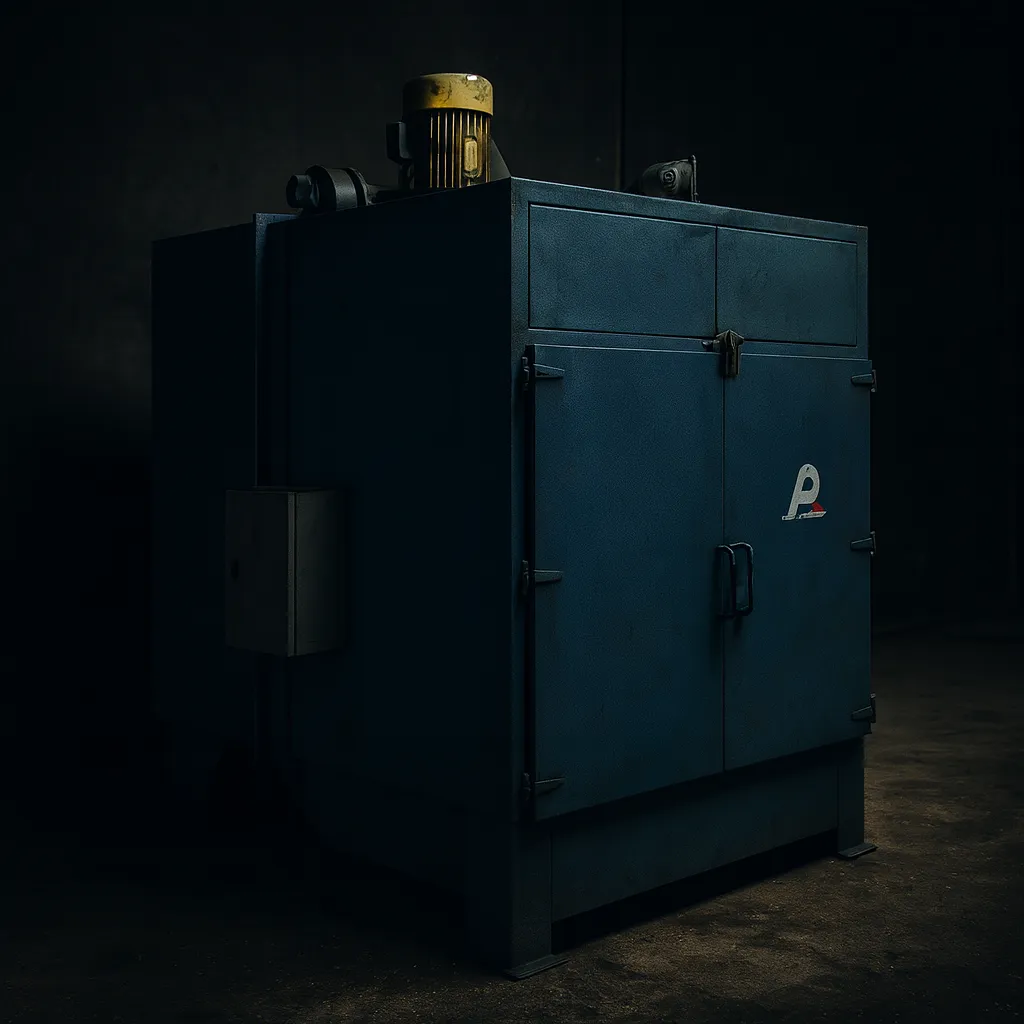
Crane-operated powder coating oven at Aero Enterprises Unit I Vasai Phata
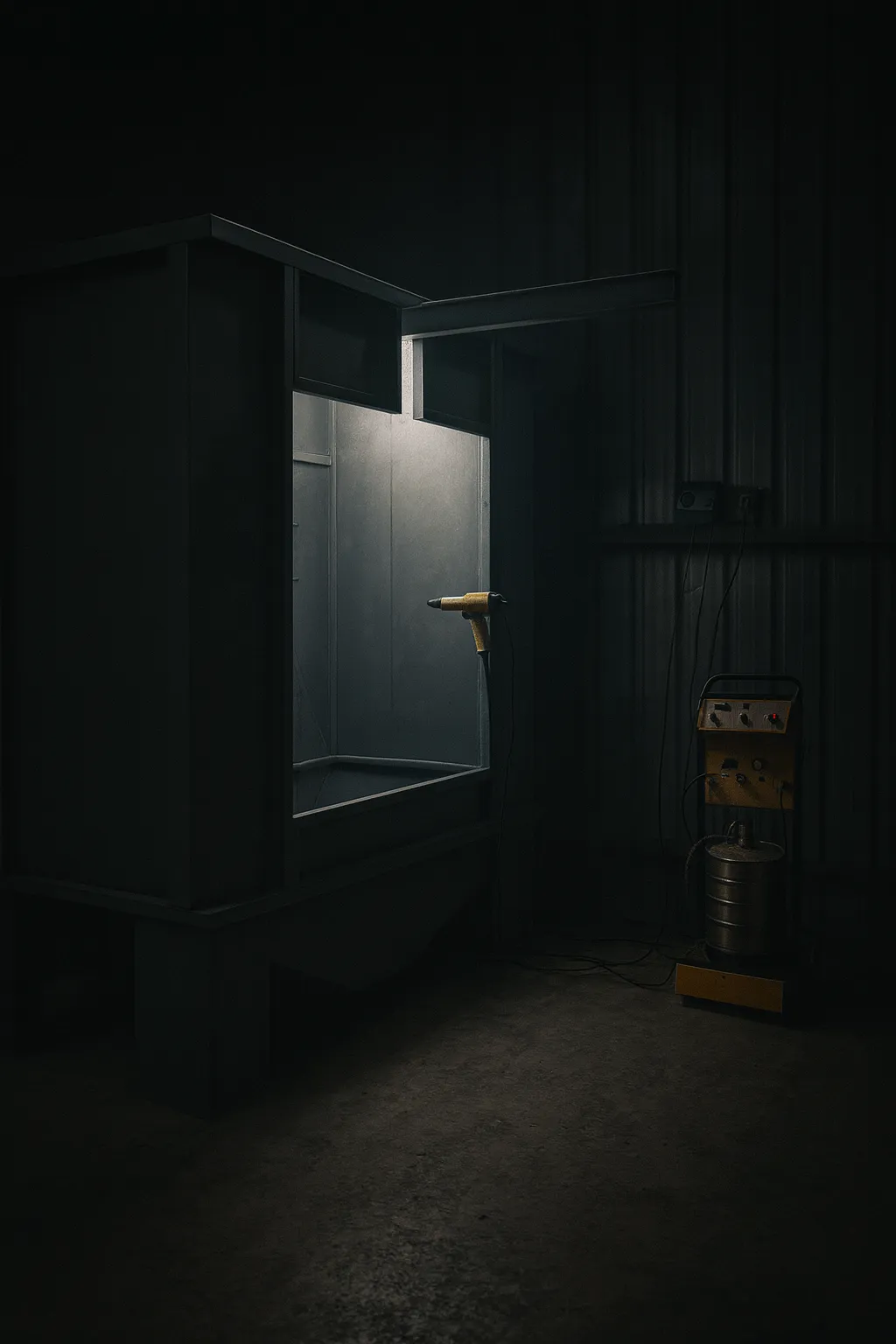
Electrostatic powder spray booth — industrial powder coating services Vasai
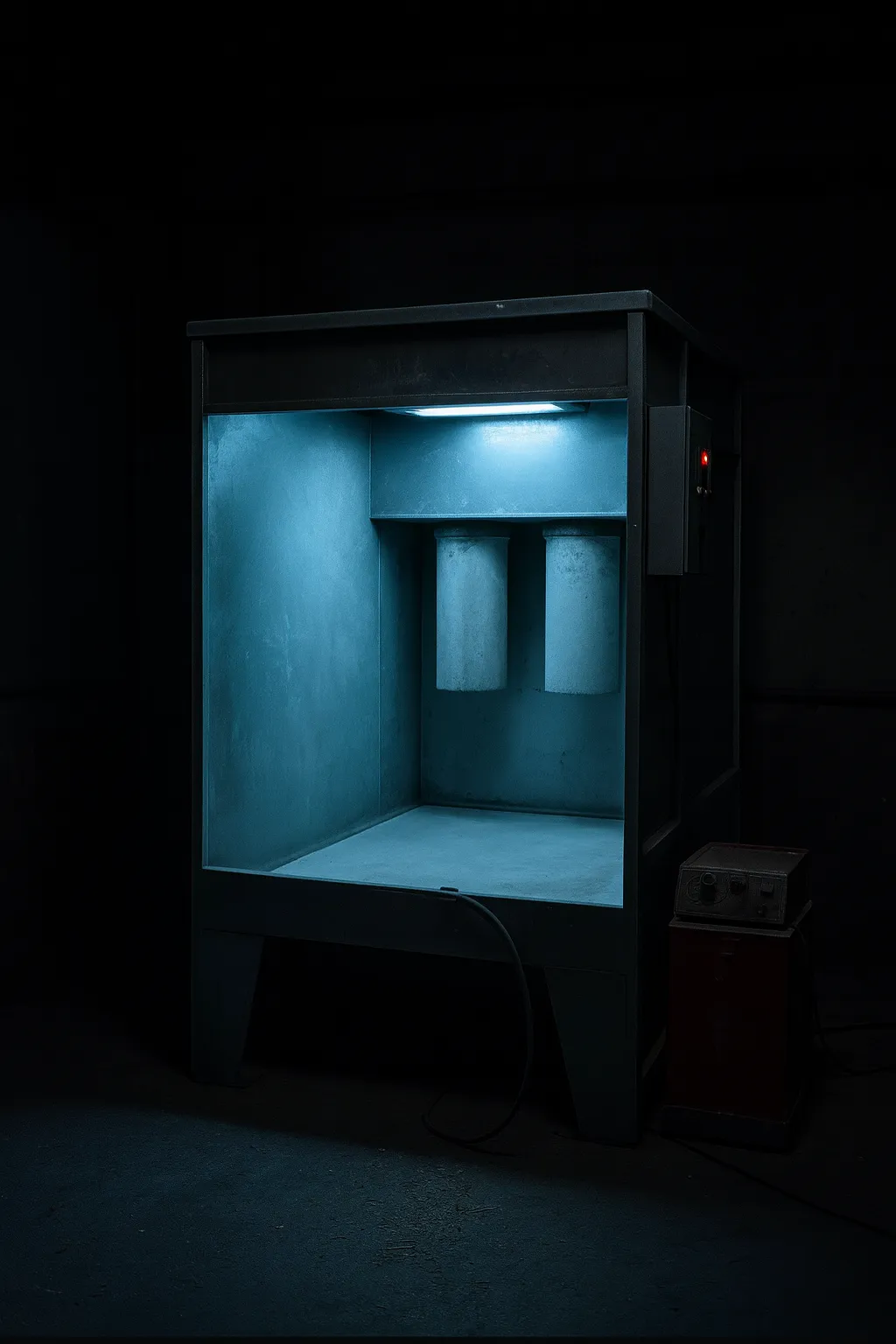
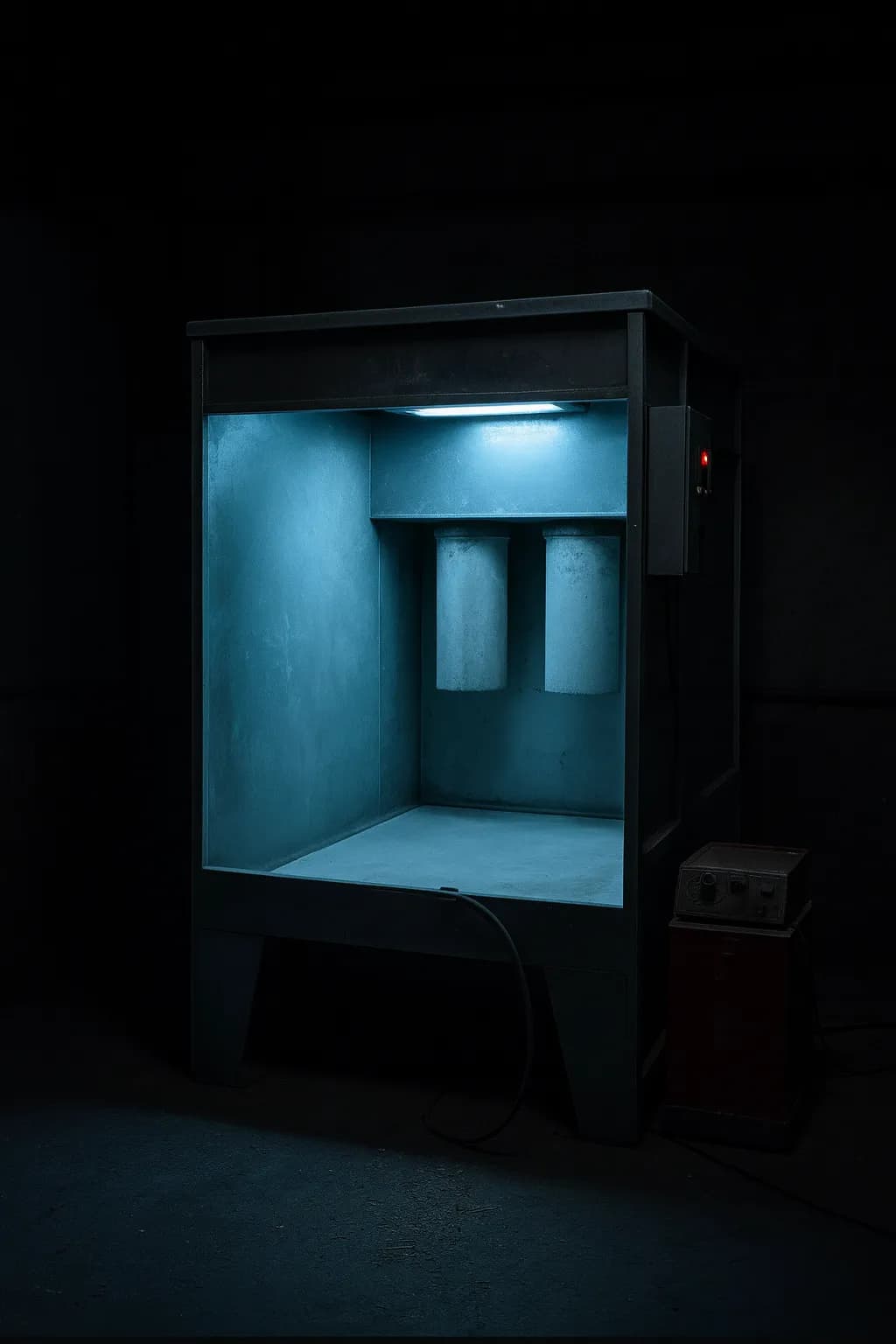
7-tank chemical pre-treatment line for powder coating at Aero Enterprises
Pre-Treatment System
7-Tank Chemical Line — Degrease, Rinse, Phosphate, Seal
Spray Booths
2 × Electrostatic Powder Spray Booths
Oven 1
4 × 5 × 6 ft — Standard batch brackets and hardware
Oven 2
4 × 8 × 4 ft — Medium enclosures and formed assemblies
Oven 3
4 × 10 × 10 ft — Crane-operated, oversized structural assemblies
Cure Temperature
180°C to 220°C — Thermostatically Controlled
Coating DFT
60–120 Microns (flat faces) · 50 Microns min (bend radii, holes)
Adhesion Standard
Class 5B — ISO 2409 cross-hatch test, every batch
Powder Types
Polyester, Epoxy-Polyester, Zinc-Rich Epoxy Primer
Finish Options
Matte, Gloss, Textured, Wrinkle, Satin
Colour Standard
Full RAL Palette — Standard colours in stock
Oven Loading
Oven 3 crane-operated and tank-fed — heavy and oversized

Machinery · Unit I Vasai Phata

7-Tank Chemical Pre-Treatment Line, 2 × Electrostatic Powder Spray Booths, Oven 1 (4×5×6 ft), Oven 2 (4×8×4 ft), Oven 3 (4×10×10 ft — Crane-Operated, Tank-Fed). All ovens thermostatically controlled with temperature data logging at Unit I Vasai Phata.

Core Capabilities

7-Stage Chemical Pre-Treatment: The complete powder coating 7 tank process at Aero Enterprises Unit I covers alkaline degreasing to remove stamping lubricants, oils, and surface contamination, water rinse stages to prevent cross-contamination between chemical tanks, zinc phosphate or iron phosphate conversion coating to build a crystalline adhesion layer on the base metal, and a final sealing rinse before components enter the spray booth. Every tank concentration is verified daily. No component enters the spray booth without completing the full 7-stage sequence.
Automated Electrostatic Powder Spraying: Two dedicated spray booths at Unit I apply powder electrostatically, charging powder particles so they are attracted uniformly to the grounded component surface. Produces consistent coverage across flat faces, inside bend radii, punched hole bores, and recessed features. Booth separation allows simultaneous processing of different RAL colours without cross-contamination between batches.
Three-Oven Curing System with Crane Operation: Oven 1 at 4×5×6 ft handles standard bracket, hardware, and small component batches. Oven 2 at 4×8×4 ft handles medium enclosure panels and formed assemblies. Oven 3 at 4×10×10 ft is crane-operated and tank-fed for oversized structural frames, large enclosure bodies, and heavy fabricated assemblies that exceed the loading capacity of standard batch ovens. All three ovens are thermostatically controlled at 180–220°C for full polyester crosslinking.
Zinc-Rich Epoxy Priming: Anti-corrosive zinc-rich epoxy primer coat applied before the polyester top coat for components specified for outdoor, coastal, or high-humidity environments. Provides sacrificial corrosion protection at cut edges, punched hole bores, and areas where the top coat may be mechanically damaged in service.
Full RAL Colour Range — MS, CR, GI, SS, Aluminium: Textured, matte, and gloss polyester powder available across the complete RAL colour standard. Standard production colours — RAL 9005 matt black, RAL 9003 signal white, RAL 7035 light grey, RAL 6005 moss green, RAL 5002 ultramarine blue — held in regular stock. SS powder coating and aluminium powder coating processed using grade-appropriate pre-treatment chemistry.
Powder Coated Sheet Metal — Integrated Production Sequence: Stamped, bent, and welded sheet metal components from Unit I proceed directly to the powder coat line on the same floor. No external transport. No coating quality variables introduced by external handling. The pre-treatment line, booths, and ovens are physically integrated with the fabrication floor.
Large Format and Heavy Assembly Coating: The crane-operated Oven 3 at 4×10×10 ft handles fabricated assemblies and structural components that most job shop coating operations cannot accommodate. Components are loaded via overhead crane, allowing safe handling of heavy or awkwardly dimensioned assemblies without manual lifting risk.
Effluent Treatment: All chemical effluents from the 7-tank pre-treatment line are neutralised and treated through Aero Enterprises' on-site effluent treatment system before discharge. Chemical waste from degreasing and phosphating stages does not enter the municipal drainage system untreated.

Verification Protocol

Daily pre-treatment tank concentration check and adjustment before production begins. Degreaser concentration, phosphate bath concentration, and rinse water conductivity measured and corrected to specification every morning. No batch enters the coating line on an out-of-specification tank.

DFT (Dry Film Thickness) measurement using calibrated digital magnetic thickness gauge on every production batch. Minimum 10 measurement points per component covering flat faces, inside bend radii, punched hole edges, and recessed features. Batches failing minimum 50 microns are stripped and recoated before dispatch.

Cross-hatch adhesion test (ISO 2409) on sample components from every batch. Class 5B result required before batch dispatch is approved. Any result below Class 5B triggers a pre-treatment investigation before recoating.

Curing temperature curve monitoring using oven data logger to verify that component metal temperature reaches and holds the specified cure temperature for the full dwell time required for complete polyester crosslinking. Under-cured powder coat passes visual inspection but fails adhesion in service.

Impact resistance test on batch samples using a falling weight impact tester to verify the cured coating does not crack or delaminate under mechanical impact. Relevant for components subject to handling, installation, and vibration loads.

Colour and gloss conformity check against a calibrated reference panel for every batch. Colour variation between delivery batches is a visible assembly problem for OEM clients. Reference panel matching is performed before batch approval — not by the client at goods inward.

At Unit I · Vasai Phata

Stamping Operations

Six stamping and forming operations run simultaneously across the 20-press floor. Each has a correct application — specifying the wrong operation produces defects that cannot be corrected downstream.

alkaline degreasing powder coating

Degreasing

Stage 1 and 2 of the 7-tank powder coating process. Alkaline degreaser removes stamping oils, cutting lubricants, rust inhibitors, and surface contamination from all metal surfaces before phosphating. The degreaser concentration is checked daily. An under-strength degreaser produces an invisible contamination film that causes delamination — not immediately, but at 6–12 months in service.

Applications

All metals — MS, CR, GI, SS, Aluminium — before any coating sequence

zinc phosphate powder coating pretreatment

Phosphating

Stage 4 of the 7-tank process. Zinc phosphate or iron phosphate conversion coating builds a crystalline microstructure on the base metal surface that the powder coat bonds to mechanically. This is the adhesion layer — without it, the coating is bonded only to the metal oxide, not the metal itself. Phosphate crystal weight and coverage are verified by concentration measurement and periodic panel testing.

Applications

MS, CR, HR — all ferrous components requiring outdoor, industrial, or corrosion-rated finish

electrostatic powder coating process

Electrostatic Spray

Powder particles are electrostatically charged in the spray gun and attracted to the grounded metal component surface. This produces uniform coverage including inside bend radii, punched hole bores, and recessed features that manual spray misses. Two dedicated booths allow simultaneous processing of different RAL colours without cross-contamination between batches.

Applications

All components — electrostatic application is standard for all powder coat jobs at Unit I

powder coating oven curing process

Curing

Coated components are loaded into one of three curing ovens and held at 180–220°C for the dwell time required for complete polyester crosslinking. Under-curing — reaching temperature but not holding it long enough — produces a coating that passes visual and initial adhesion checks but fails impact resistance and outdoor UV exposure. Oven temperature is data-logged on every batch.

Applications

All coated components — oven allocated by component size and batch volume

zinc rich epoxy powder coating primer

Epoxy Priming

A zinc-rich epoxy primer coat is applied before the polyester top coat for components specified for outdoor, coastal, or chemical-exposure environments. The epoxy primer provides sacrificial cathodic protection — if the top coat is scratched or chipped in service, the zinc in the primer oxidises preferentially and protects the base metal from developing a rust front under the coating.

Applications

Outdoor structural components · Coastal zone installations · Solar tracker hardware · Flood light brackets

powder coating thickness measurement

DFT Verification

Dry Film Thickness is measured using a calibrated digital magnetic thickness gauge on every production batch. A minimum of 10 measurement points per component type covers flat faces, inside bend radii, punched hole edges, and recessed features. Powder coating thickness on bend radii and hole bores is always thinner than flat faces — measuring only flat faces produces a passing result on a batch with inadequate coverage where it matters.

Applications

Every batch — DFT verification is mandatory before batch dispatch approval at Unit I

Which Process Is Right For You?

Progressive vs Compound
vs Deep Draw Die

Die type determines per-part cost, tooling investment, and achievable tolerance. Wrong die type for the volume produces either over-investment or inadequate batch consistency.

Standard — Most Applications

Polyester Powder

SpeedSingle coat, 180–220°C cure
Feed MethodPre-treated component, electrostatic spray
Tool CostLow — standard stock colours
Accuracy60–120 microns DFT

Best For

Indoor and outdoor fabricated components, LED brackets, furniture hardware, enclosures — the correct choice for 90% of jobs

Interior / Semi-Outdoor

Epoxy-Polyester

SpeedSingle coat, 180°C cure
Feed MethodPre-treated component, electrostatic spray
Tool CostLow-medium
Accuracy60–100 microns DFT

Best For

Electrical enclosures, indoor panels, and components where chemical resistance is required but UV exposure is limited — epoxy yellows under direct UV

Outdoor / Coastal / High Corrosion

Zinc-Rich Epoxy Primer + Polyester

SpeedTwo-coat — primer cure then top coat
Feed MethodPre-treated component, two spray passes
Tool CostMedium — two coat materials
Accuracy100–160 microns DFT total

Best For

Outdoor structural components, solar tracker hardware, flood light brackets, coastal and industrial zone installations requiring maximum corrosion resistance

Manufacturing ID · Unit I Vasai Phata

Unit I Capability

7-Tank Chemical Pre-Treatment Line, 2 × Electrostatic Powder Spray Booths, Oven 1 (4×5×6 ft), Oven 2 (4×8×4 ft), Oven 3 (4×10×10 ft — Crane-Operated, Tank-Fed). All ovens thermostatically controlled with temperature data logging at Unit I Vasai Phata.

Full Machinery Inventory

Industries Served

Industrial Applications

All Sector Capabilities
01

LED Lighting Manufacturers

Housing shells, heat sink enclosures, driver compartment bodies, flood light brackets, and mounting hardware requiring consistent RAL colour, scratch-resistant matte or gloss finish, and outdoor UV-stable polyester coating for field-installed lighting assemblies.

02

Tracker OEMs

Structural mounting brackets, pivot arm assemblies, channel sections, and fabricated frame components for solar tracker systems requiring corrosion-resistant powder coat finish for outdoor installation across Maharashtra's varied climate zones.

03

Automotive OEMs

Chassis brackets, body components, and structural hardware requiring consistent coating adhesion, impact resistance, and colour conformity across high-volume production batches for Tier-1 and Tier-2 automotive supply chain delivery.

04

Furniture Manufacturers

Wall unit panels, bracket hardware, shelf support components, and modular frame sections requiring consistent RAL colour across multi-batch deliveries for assembly into finished furniture products.

05

Stationery Manufacturers

Stamped and formed hardware components requiring clean, consistent powder coat finish for consumer-facing stationery product assemblies.

06

Sheet Metal Component and Parts Clients

Industrial enclosure bodies, electrical panel frames, HVAC support brackets, fabricated structural assemblies, and custom sheet metal components across the full material and geometry range processed at Unit I.

People Also Ask

Industrial Powder Coating | Aero Enterprises Vasai Technical FAQ

Common technical and commercial questions about industrial powder coating | aero enterprises vasai at Aero Enterprises Unit I, Vasai Phata.

What is powder coating?

Powder coating is a dry finishing process where electrostatically charged powder particles are sprayed onto a grounded metal component and then cured in an oven at 180–220°C to form a hard, durable, and protective finish. The result is significantly tougher than conventional liquid paint — more resistant to chipping, scratching, corrosion, and UV degradation. Powder coating is used across industrial, architectural, automotive, and consumer product manufacturing for both functional corrosion protection and decorative surface finish.

What is the 7 tank process for powder coating?

The 7-tank powder coating pre-treatment process is the chemical surface preparation sequence performed on metal components before powder is applied. At Aero Enterprises Unit I, the 7-stage sequence covers: Stage 1 — alkaline degreasing (removes oils, lubricants, and contamination), Stage 2 — water rinse, Stage 3 — activation (surface conditioning for phosphate crystal nucleation), Stage 4 — zinc phosphate or iron phosphate conversion coating (builds the adhesion layer), Stage 5 — water rinse, Stage 6 — passivation sealing rinse, Stage 7 — DI water final rinse before booth entry. Tank concentrations are verified and adjusted daily. This sequence is the reason Aero Enterprises achieves Class 5B cross-hatch adhesion on every batch — not the powder brand.

What is the powder coating process step by step?

The complete powder coating process at Aero Enterprises Unit I runs in four stages: (1) 7-tank chemical pre-treatment — degreasing, phosphating, and sealing to prepare the metal surface for adhesion; (2) electrostatic powder spraying — charged powder particles applied uniformly to the grounded component in dedicated spray booths; (3) oven curing — components held at 180–220°C in thermostatically controlled ovens for complete polyester crosslinking; (4) quality verification — DFT measurement, cross-hatch adhesion test (ISO 2409), impact resistance test, and colour conformity check before batch dispatch approval.

What is powder coating thickness and how is it measured?

Powder coating thickness — measured as Dry Film Thickness (DFT) — is the depth of the cured coating on the component surface. At Aero Enterprises Unit I, the target DFT range is 60 to 120 microns on flat faces and a minimum of 50 microns on inside bend radii and punched hole bores. DFT is measured using a calibrated digital magnetic thickness gauge on a minimum of 10 measurement points per component type on every production batch. Coating on bend radii and hole bores is always thinner than flat faces — measuring only flat faces produces misleading results.

What is epoxy powder coating and when is it used?

Epoxy powder coating uses an epoxy resin base instead of polyester, giving it superior chemical resistance and adhesion compared to standard polyester powder. It is used for electrical enclosures, indoor panels, and components requiring chemical resistance. The limitation of epoxy powder is UV instability — it yellows and chalks under direct outdoor sunlight. For outdoor applications, epoxy powder is used as a primer coat under a polyester top coat, combining epoxy's adhesion and chemical resistance with polyester's UV stability. At Aero Enterprises Unit I, zinc-rich epoxy primer combined with a polyester top coat is available for outdoor and coastal installation components.

What is MS powder coating?

MS powder coating — mild steel powder coating — is the application of a polyester or epoxy-polyester powder coat finish to mild steel (MS) fabricated components. Mild steel requires the full 7-tank pre-treatment sequence before coating, including zinc phosphate conversion coating, because bare MS oxidises rapidly and provides poor adhesion without a phosphate conversion layer. At Aero Enterprises Unit I, MS powder coating covers all fabricated mild steel components including brackets, enclosures, frames, panels, and hardware across the full RAL colour range.

Can stainless steel be powder coated?

Yes. SS powder coating at Aero Enterprises Unit I uses a modified pre-treatment chemistry appropriate for stainless steel — standard zinc phosphate chemistry for MS does not provide the same conversion crystal structure on stainless surfaces. SS 304 and SS 316 components are pre-treated with appropriate chemistry, then electrostatically coated and cured at the standard temperature profile. SS powder coating is specified when a specific RAL colour or textured finish is required on a component that also needs the base corrosion resistance properties of stainless steel.

What is powder coating near me in Vasai?

Aero Enterprises Unit I at Survey No. 109, Richard Compound, Manchipada Road, Vasai Phata, Vasai East, Palghar 401208 provides industrial powder coating services in Vasai, Palghar, Virar, Nalasopara, Bhayandar, Mira Road, and the broader Mumbai metro region. The facility operates a 7-tank pre-treatment line, two electrostatic spray booths, and three curing ovens including a crane-operated 4×10×10 ft oven for large and heavy assemblies. Contact: +91 84591 21717.

What powder coating colours are available at Aero Enterprises?

Aero Enterprises Unit I stocks standard production colours in regular inventory including RAL 9005 matt black, RAL 9003 signal white, RAL 7035 light grey, RAL 6005 moss green, and RAL 5002 ultramarine blue. The full RAL colour standard is available with minimum order quantity and colour change lead time for non-stock colours. Finish options include matte, satin, gloss, textured, and wrinkle finishes in polyester, epoxy-polyester, and zinc-rich epoxy primer powder types.

What is the powder coating cost for sheet metal components?

Powder coating cost for sheet metal components at Aero Enterprises Unit I is calculated per square foot of surface area, adjusted for component geometry complexity, pre-treatment requirements, colour specification, and batch volume. Components with complex geometry — deep recesses, small hole patterns, or tight internal corners — require additional spray time for coverage consistency. Zinc-rich epoxy primer plus polyester top coat is a two-coat process and is priced accordingly. Contact the engineering desk at +91 84591 21717 for a specific coating cost against your component drawing and batch volume.

Have a Technical Question Not Listed Here?

Contact our engineering desk directly. We respond with technical specifics, not sales language.

Contact Engineering Desk
Engineering Knowledge Base

Technical Guides
for Industrial Powder Coating | Aero Enterprises Vasai

2026-03-03

Flood Light Mounting Bracket Manufacturing: Sheet Metal Fabrication Guide

A flood light mounting bracket is one of the most mechanically stressed components in any outdoor lighting installation. It carries the full dead weight of the fixture, absorbs wind load continuously, and sits exposed to UV, rain, and coastal salt air for a service life measured in decades. Most procurement decisions for flood light brackets are made on price per piece. The correct decision is made on material grade, coating system, bend geometry, and fabrication process. A bracket that fails at 18 months in an outdoor installation is not a cheap bracket. It is an expensive one.

Read Guide

2026-03-15

L Patti Manufacturing: How Steel Corner Brackets for Furniture Are Made

An L patti is one of the most structurally critical components in a wooden furniture assembly and one of the most consistently under-specified. Furniture manufacturers across India source corner brackets on unit price alone, without specifying sheet thickness, hole pattern accuracy, bend radius, or coating system. The result is brackets that deform under joint load, loosen at 12 months, and generate warranty returns that cost multiples of the original hardware saving. At Aero Enterprises Unit I Vasai Phata, L patti corner brackets are manufactured as precision stamped and powder coated structural hardware, not as commodity press shop output.

Read Guide

2026-03-03

How Saddle Pipe Clamps Are Made Using Power Press Stamping

A saddle pipe clamp looks like one of the simplest components in any building or industrial installation. A U-shape bend, two mounting holes, a painted or galvanized finish. Most procurement decisions treat it exactly that way, a commodity item bought on price per piece with no specification depth. That approach works until a clamp deforms under pipe weight, corrodes through at 18 months in a wet riser shaft, or pulls away from the wall because the mounting hole punched undersized for the fastener. At Aero Enterprises Unit I Vasai Phata, saddle pipe clamps are not treated as commodity stampings. They are treated as structural hardware components where the die geometry, material grade, hole pattern accuracy, and coating system determine whether the clamp performs for 10 years or fails at 18 months.

Read Guide

2026-03-03

Wall Unit Folder Bracket Manufacturing: Sheet Metal Stamping Guide

A wall unit folder bracket is one of those components that nobody thinks about until it fails. It carries the static weight of loaded document folders every day, takes repeated dynamic loading every time a folder is removed or replaced, and sits on a wall unit that may be moved, reinstalled, and reconfigured multiple times over its service life. Most buying decisions for folder brackets are made on unit price alone. The correct decision is made on sheet thickness, die geometry, mounting hole pattern, and powder coat system. A bracket that deforms at 6 months or whose coating chalks off in a year is not a cost saving. It is a replacement cost plus downtime.

Read Guide

2026-03-03

From Flat Sheet Metal to Precision Component: How Aero Enterprises Does It

A flat sheet of mild steel sitting in the stockyard at Aero Enterprises Unit II Dhumal Nagar has no value to a client. The value is created at Unit I Vasai Phata, where that sheet goes through a defined sequence of power press stamping, CNC bending, and punching operations to become a finished precision component that fits a specific assembly, carries a specific load, and meets a specific dimensional tolerance. That transformation is not a series of independent steps. It is a production system. Understanding how that system works, what each process contributes, and where the failure points are is the difference between a client who gets consistent precision parts and one who gets consistent rejections.

Read Guide

Request a Quote for Industrial Powder Coating | Aero Enterprises Vasai

JSW and TATA certified steel at Unit II. Full fabrication sequence — stamping, bending, welding, powder coat — at Unit I. No subcontracting. No vendor handoffs.

Mill Test Certificates (MTC) Available Upon Request