Sheet Metal Shearing & Blanking Services - Hydraulic, Manual & Light-Gauge Cutting Vasai - Mumbai - Palghar
CNC + Hydraulic + Manual Shearing - 10 Machines - 0.3mm to 6mm MS - CR / HR / GI / SS / Aluminium - ±0.2mm - ISO 9001:2015
Aero Enterprises Unit I, Vasai Phata provides sheet metal shearing and blanking services in Vasai, Mumbai, and Palghar. We operate a 10-machine shearing, cutting, drilling, and grinding division running CNC shearing, manual hydraulic shearing, mechanical shearing, and kachi light-gauge cutting. ISO 9001:2015 certified shearing and blanking for MS IS 2062, CR IS 513, GI IS 277, SS 304, SS 316, aluminium, brass, and copper with blade gap calibration, first-off squareness verification, and direct integration into stamping, bending, welding, and powder coating on the same production floor.
Expertise and Experience
Aero Enterprises Unit I Vasai Phata operates a 10-machine shearing, cutting, drilling, and surface finishing division that handles every blank preparation requirement on a single production floor. The shearing line runs three distinct machine types: CNC shearing for precision programmed blank production, manual hydraulic shearing for heavy-gauge and structural blanks, and mechanical shearing for standard batch preparation. Two kachi light-gauge machines handle thin sheet and strip shearing below 1.5mm to prevent edge deformation. Four drill tapping machines and one surface grinding machine complete the division. All operations feed directly into our stamping, bending, welding, and finishing lines without inter-vendor transport.
Why Our Process Wins
An inaccurate blank is not a shearing problem; it is a compounding error. A blank that is 0.3mm oversized on one edge produces a bent component that is out of position and a hole pattern that is misaligned after stamping. At Aero Enterprises Unit I, blade gap calibration per material grade is performed before every production run. Squareness is verified by diagonal measurement on first-off blanks. Grain direction is maintained for components undergoing subsequent bending or deep drawing to prevent edge cracking.
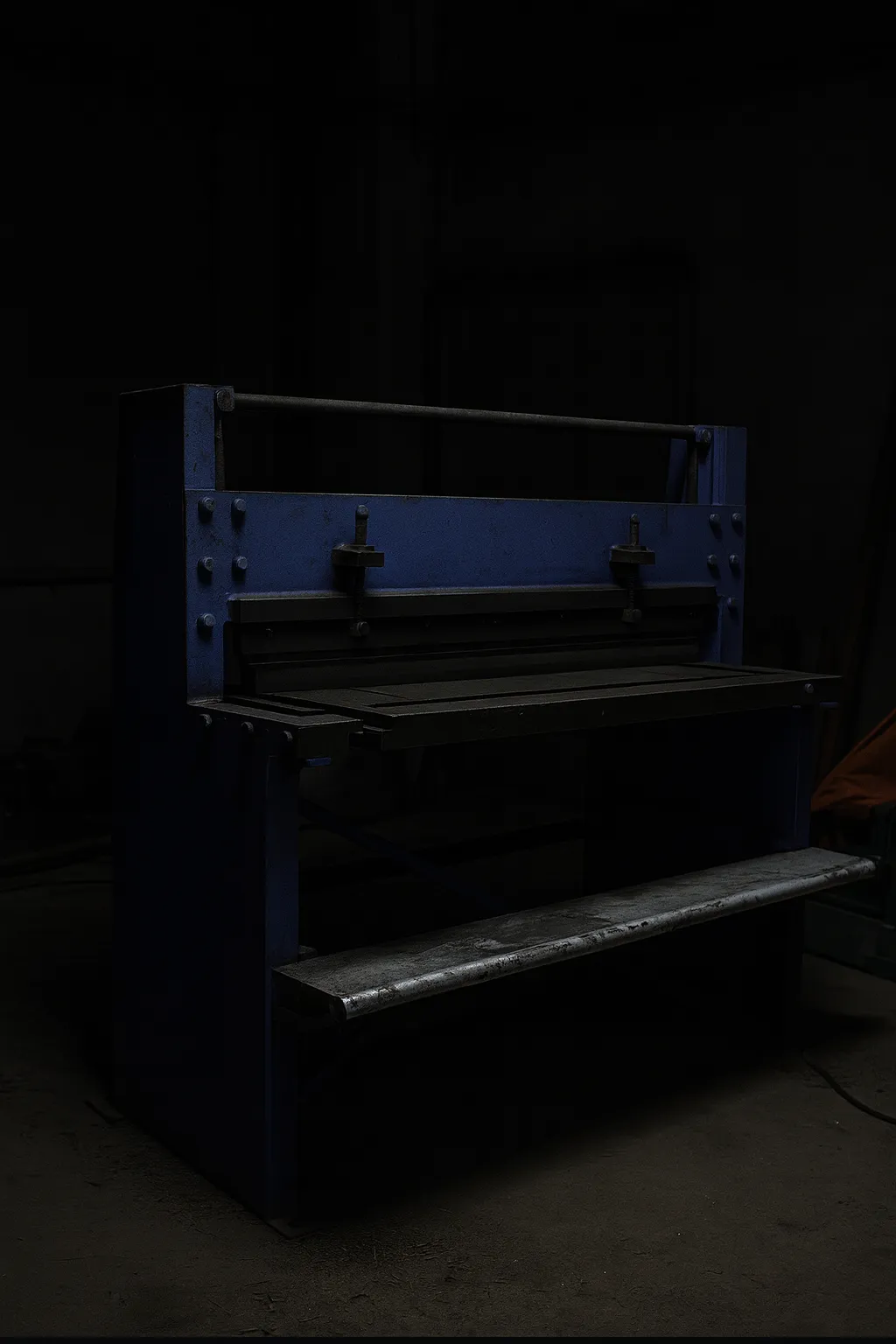
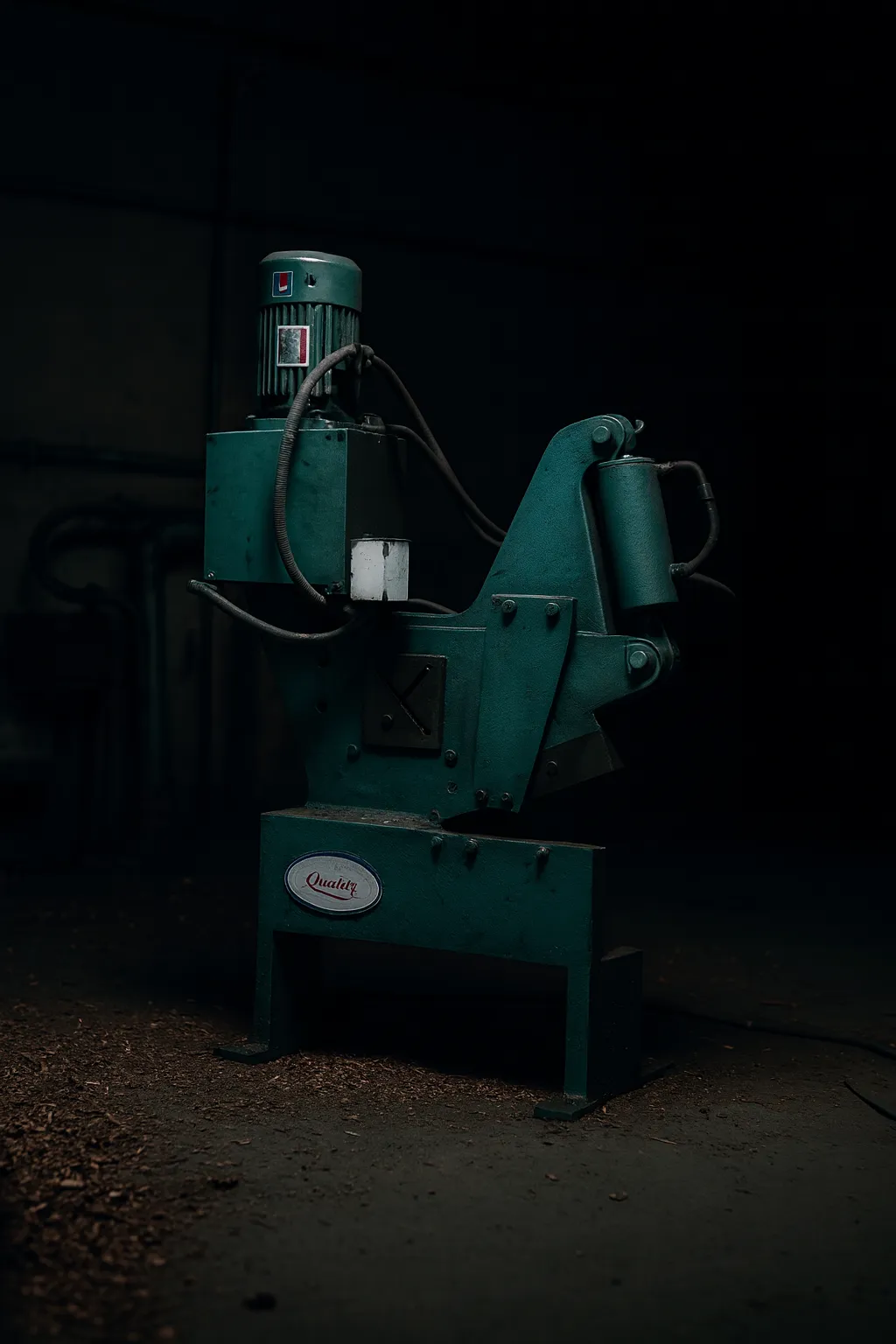
Machinery · Unit I Vasai Phata
CNC Shearing Machine, Hydraulic Shearing Machine, Mechanical Shearing Machine, 2x Kachi Cutting Machines, 4x Drill Tapping Machines, 1x Surface Grinder. Integrated with Fiber Laser, Power Press Floor, Press Brake, Welding, and Powder Coat Line.
Core Capabilities
Verification Protocol
Blade gap calibration per material grade and thickness before every run.
First-off diagonal measurement for squareness verification.
Blank dimension verification against required length and width using digital calipers.
Grain direction verification for DDQ/tight-radius bending components.
PVC film protection for SS 304/316 surfaces during shearing.
Go/No-Go gauge verification for all tapped threads.
Flatness verification on ground surfaces using precision straight edge.
Stamping Operations
Six stamping and forming operations run simultaneously across the 20-press floor. Each has a correct application — specifying the wrong operation produces defects that cannot be corrected downstream.
Shearing
Straight-line cutting using opposing blade forces. Blade gap calibrated to 5-10% of thickness for clean edge quality.
Applications
MS, CR, GI, SS structural and production blanks.
Blanking
Punch and die cut for net-shape profiles in one stroke. Used for round, oval, or complex shapes feeding stamping lines.
Applications
Round blanks, irregular profiles, net-shape blanks.
CNC Back Gauge Shearing
NC-controlled positioning for ±0.2mm blank length accuracy without manual stops. Correct for high-volume batches.
Applications
Precision blanks for bending and stamping.
Kachi Light-Gauge Cutting
Purpose-built for thin sheet and strip below 1.5mm to eliminate edge rollover and burr common in hydraulic shears.
Applications
CR thin strip, GI shim stock, decorative SS.
Drill Tapping
M3 to M16 thread tapping on fabricated assemblies. Eliminates PEM/weld nuts for many applications.
Applications
Enclosure panels, bracket assemblies.
Surface Grinding
Flatness correction, weld flush grinding, and surface roughness preparation for precision assembly.
Applications
Post-weld flatness, cosmetic weld dressing.
Manufacturing ID · Unit I Vasai Phata
Unit I Capability
CNC Shearing Machine, Hydraulic Shearing Machine, Mechanical Shearing Machine, 2x Kachi Cutting Machines, 4x Drill Tapping Machines, 1x Surface Grinder. Integrated with Fiber Laser, Power Press Floor, Press Brake, Welding, and Powder Coat Line.
Industries Served
Industrial Applications
LED Lighting
Panel blanks, heat sink strips, and driver enclosure blanks.
Solar Tracker OEMs
Structural plate blanks and slotted adjustment plates.
Automotive OEMs
Bracket blanks and reinforcement plate profiles requiring grain-control.
Furniture
Panel blanks and modular frame hardware.
Stationery
Mechanism housing profiles and strip blanks.
General Fabrication
Industrial enclosures and HVAC structural supports.
Precision Shearing & Blanking Services | Aero Enterprises Vasai — Technical FAQ
Common technical and commercial questions about precision shearing & blanking services | aero enterprises vasai at Aero Enterprises Unit I, Vasai Phata.
What is shearing in sheet metal?
Shearing in sheet metal is a cutting process where a straight-line cut is made through sheet material by applying opposing blade forces above and below the sheet. The upper blade is angled so the cut progresses from one end to the other, reducing the force required. Shearing produces straight-edge blanks from sheet stock without material removal — the cut edge is formed by fracture propagation between the upper and lower blade, not by chip formation as in sawing or grinding. At Aero Enterprises Unit I, shearing is performed on CNC, hydraulic, and mechanical shearing machines depending on material grade, thickness, and blank dimension accuracy requirement.
What is the shearing process in sheet metal fabrication?
The shearing process in sheet metal fabrication involves four steps: (1) blade gap setting — the clearance between upper and lower blades is calibrated to 5–10% of material thickness for clean edge condition; (2) sheet positioning — the sheet is placed on the shearing table and positioned against the back gauge stop which controls blank length; (3) shearing stroke — the upper blade descends and shears the material, with the cut progressing from one end to the other; (4) blank verification — first-off blanks are checked for squareness, dimension, and edge condition before batch shearing is approved. At Aero Enterprises Unit I, blade gap calibration per material grade is performed before every production run.
What is blanking in sheet metal?
Blanking is a sheet metal cutting process where a punch and die are used to cut a net-shape blank from sheet material in a single press stroke. The punched-out blank is the product — the surrounding sheet is scrap skeleton. Blanking differs from shearing in that it produces complex shaped blanks (round, oval, irregular profiles) rather than straight-line cuts. Blanking is used to produce net-shape blanks feeding deep draw operations, progressive die stamping, and precision component production where the blank profile must be consistent to maintain the downstream forming process.
What is the difference between shearing and blanking?
Shearing produces straight-line cuts through sheet metal using two opposing blades — the output is a rectangular or strip blank. Blanking uses a punch and die in a press to cut a net-shape profile blank from sheet — the output can be any closed profile geometry. Shearing is faster and lower cost for rectangular blanks. Blanking is correct for round, oval, and complex-profile blanks where straight-line shearing cannot produce the required blank geometry. At Aero Enterprises Unit I, shearing is performed on the dedicated shearing machines and blanking is performed on the power press floor using blanking dies.
What causes burr on sheared sheet metal edges?
Burr on sheared sheet metal edges is caused primarily by incorrect blade gap setting for the material grade and thickness being sheared. A blade gap that is too large produces excessive rollover on the entry face and a large burr on the exit face. A blade gap that is too small increases required shearing force and produces a rough fracture zone. Secondary causes include worn or chipped blade edges. At Aero Enterprises Unit I, blade gap is calibrated per material grade and thickness before every production run. First-off edge condition is inspected before batch shearing is approved.
What is grain direction in sheet metal shearing?
Grain direction in sheet metal refers to the directionality of the steel microstructure produced during rolling — steel grains are elongated in the rolling direction. For components undergoing tight-radius bending or deep drawing after shearing, the blank must be oriented so the primary bend line runs perpendicular to the rolling direction (across grain). Bending with the grain — bend line parallel to the rolling direction — risks cracking on the outer bend face on ductile grades like CR IS 513 DDQ. At Aero Enterprises Unit I, grain direction is maintained and documented for all blanks destined for DDQ deep draw and tight-radius bending operations.
What is the maximum shearing thickness at Aero Enterprises?
Maximum shearing thickness at Aero Enterprises Unit I is 6.0mm for mild steel (MS HR IS 2062) on the manual hydraulic shearing machine with 2500mm maximum blade length. Maximum stainless steel shearing thickness is 4.0mm. Thin gauge below 1.5mm is handled on two dedicated kachi light-gauge cutting machines for clean edge condition. All thicknesses up to 6mm MS are processed across CR IS 513, HR IS 2062, GI IS 277, SS 304, SS 316, aluminium, brass, and copper.
What is the difference between CNC shearing and manual hydraulic shearing?
CNC shearing uses an NC-controlled back gauge that positions the sheet automatically before each cut stroke — producing consistent blank dimensions across the full batch without manual measurement between cuts. It is correct for precision blanks in high-volume batches where ±0.2mm blank dimension consistency matters. Manual hydraulic shearing uses a manually set back gauge — the operator measures and sets the stop position for each cut. Hydraulic drive provides the force for thick and heavy-gauge material. It is correct for structural plate cutting, large-format blanks, and non-precision work where CNC back gauge control is not required.
What shearing and blanking services are available near me in Vasai?
Aero Enterprises Unit I at Survey No. 109, Richard Compound, Manchipada Road, Vasai Phata, Vasai East, Palghar 401208, Maharashtra provides CNC shearing, hydraulic shearing, mechanical shearing, kachi light-gauge cutting, drill tapping, and surface grinding services in Vasai, Palghar, Virar, Nalasopara, Bhayandar, Mira Road, and the Mumbai metro region. Sheared and blanked components proceed directly to CNC press brake bending, stamping, welding, and powder coating on the same floor.
Have a Technical Question Not Listed Here?
Contact our engineering desk directly. We respond with technical specifics, not sales language.
Contact Engineering DeskTechnical Guides
for Precision Shearing & Blanking Services | Aero Enterprises Vasai
2026-01-11
What Is Sheet Metal Manufacturing and How Does It Work?
Sheet metal manufacturing is the industrial process of converting flat metal sheets into finished components through cutting, punching, bending, and forming operations. It forms the backbone of electrical enclosures, automotive brackets, HVAC systems, and heavy machinery structures.
2026-03-02
Sheet Metal for Fabrication: When to Use HR vs CR vs GI Steel in India
Most fabricators in India default to whatever grade is cheapest or most available on the day of the order. That works until a weld warps, a powder coat delaminates at six months, or a client returns a full batch. The HR vs CR decision is not a price decision. It is a process-matching decision that needs to happen before the first cut, not after the first rejection.
2026-03-05
Wall Unit Folder Bracket Manufacturing: Sheet Metal Stamping Guide
A wall unit folder bracket is one of those components that nobody thinks about until it fails. It carries the static weight of loaded document folders every day, takes repeated dynamic loading every time a folder is removed or replaced, and sits on a wall unit that may be moved, reinstalled, and reconfigured multiple times over its service life. Most buying decisions for folder brackets are made on unit price alone. The correct decision is made on sheet thickness, die geometry, mounting hole pattern, and powder coat system. A bracket that deforms at 6 months or whose coating chalks off in a year is not a cost saving. It is a replacement cost plus downtime.