What Is Sheet Metal Manufacturing and How Does It Work?
Sheet metal manufacturing is the industrial process of converting flat metal sheets into finished components through cutting, punching, bending, and forming operations. It forms the backbone of electrical enclosures, automotive brackets, HVAC systems, and heavy machinery structures.
Aero Enterprises Desk
Industrial fabrication and sheet metal production analysis
“Content compiled using fabrication shop floor practices, press brake programming standards, and production quality inspection protocols.”
Last Reviewed: 2026-05-15
Direct Answer
Sheet metal manufacturing is a fabrication process where flat metal sheets are cut, punched, bent, and formed into functional industrial components using machines such as shearing machines, power presses, and press brakes.
Quick Summary
- Transforms flat metal sheets into usable industrial parts
- Core processes include cutting, punching, bending, and forming
- Common materials include mild steel, stainless steel, and aluminum
- Used in electrical panels, HVAC systems, automotive and machinery components
- Design accuracy and tooling selection directly impact cost and rejection rates
Sheet Metal Manufacturing Process Explained in Depth
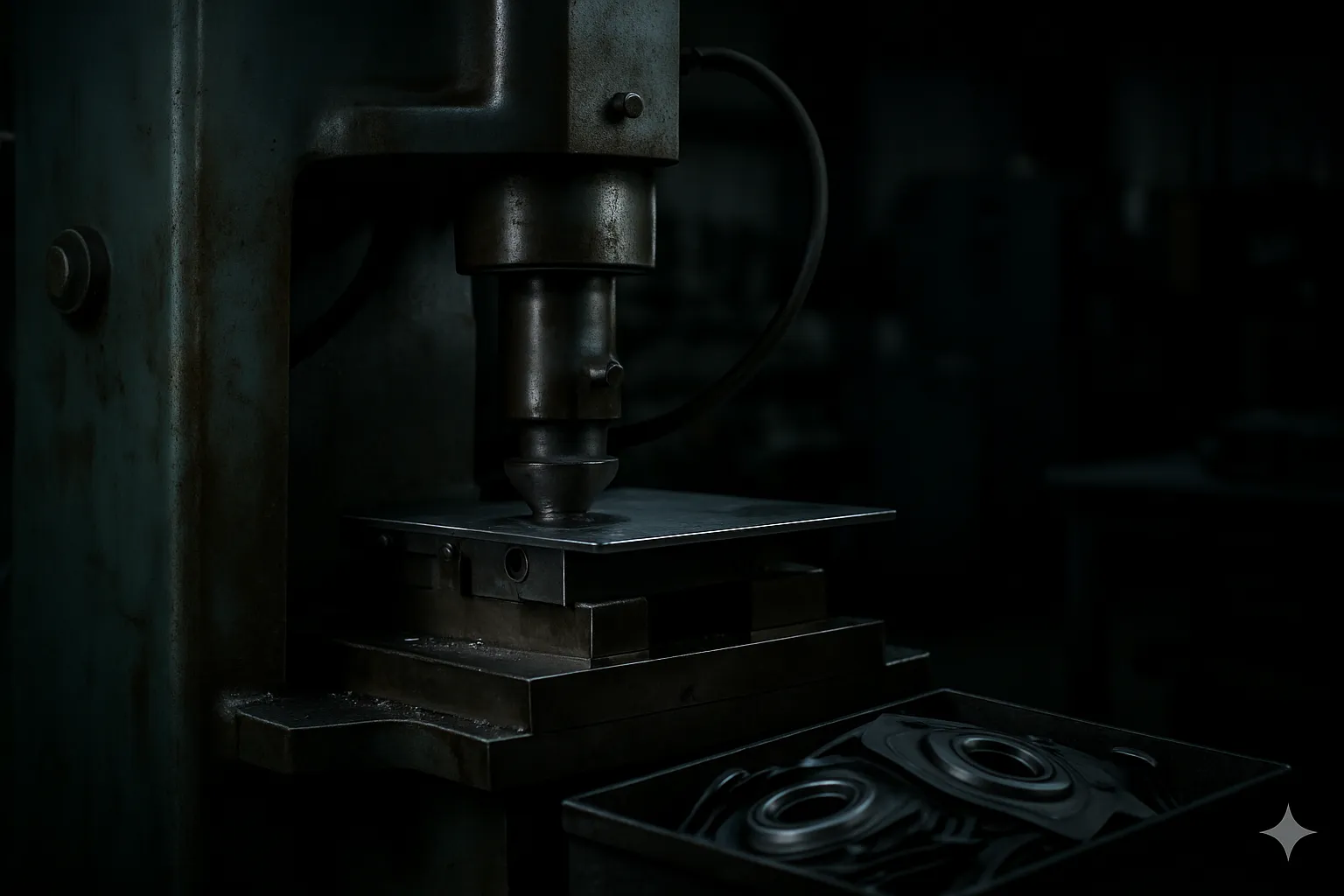
Sheet metal manufacturing begins with raw flat sheets that are cut to required dimensions using shearing machines or CNC laser cutting systems. After cutting, punching operations create holes, slots, and cutouts using power presses or turret punching machines. The next stage is bending, performed on hydraulic or CNC press brakes where controlled force shapes the sheet into precise angles. For more complex geometries, forming operations using dies are applied. Finally, finishing processes such as deburring, welding, grinding, and powder coating prepare the component for industrial application.
Technical Insight
Critical production variables include material thickness, tensile strength, bend allowance, die opening, and machine tonnage. Incorrect bend allowance calculation results in dimensional inaccuracies. Excessive tonnage can cause cracking, while insufficient tonnage leads to springback and angle deviation.
Why It Matters
Understanding the complete process flow helps engineers and procurement teams evaluate manufacturability before production. Most sheet metal production failures originate from poor design alignment with machine capability rather than material defects.
Infrastructure & Process Flow at Aero Enterprises Unit I
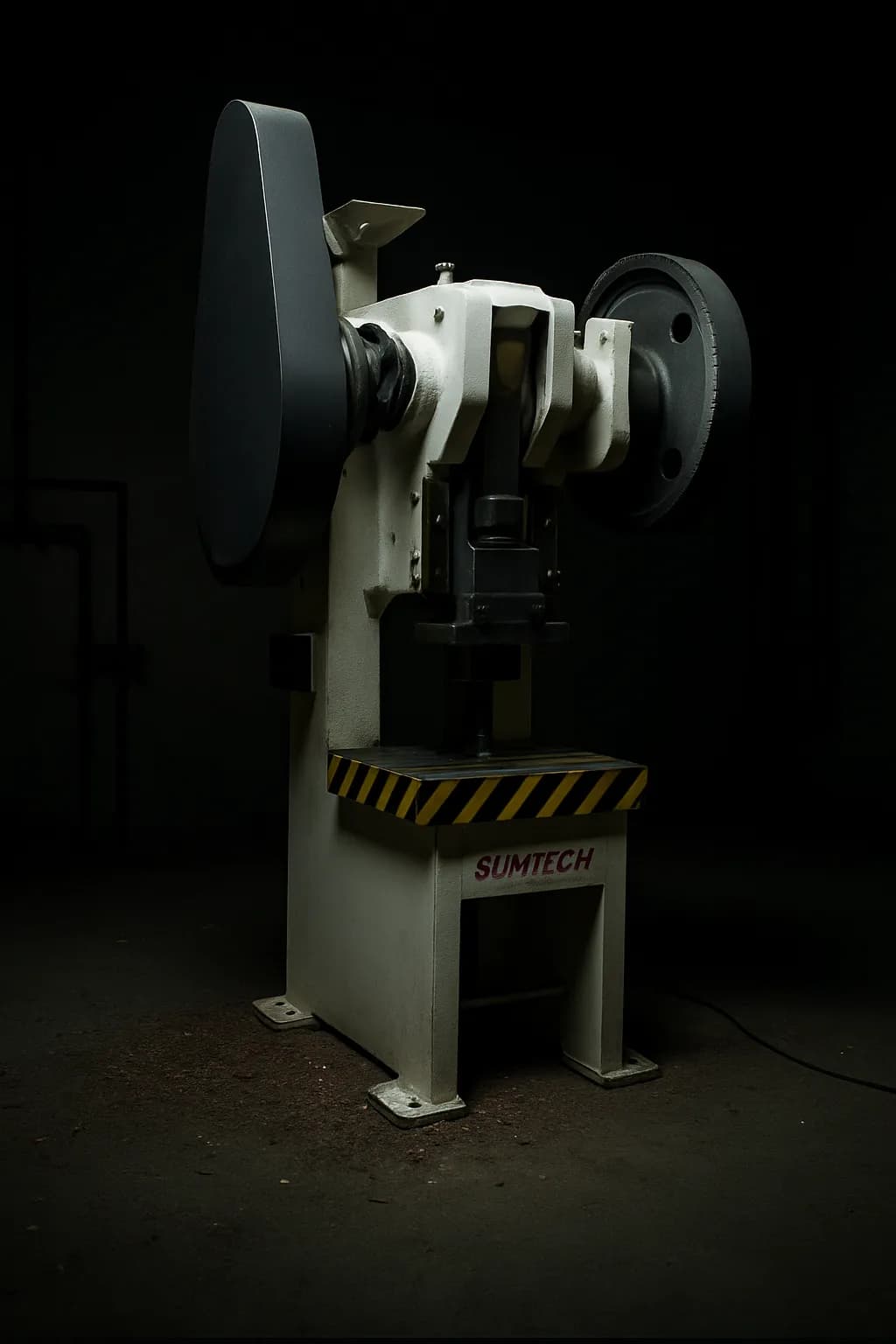
At our Unit I Vasai Phata facility, we operate 20 hydraulic and mechanical power presses, a 3000W fiber laser, and multi-axis CNC press brakes. Raw material is verified at our Unit II Dhumal Nagar stockyard before dispatching to the production floor. This end-to-end integration ensures that stamping, bending, and punching operations occur on a single floor, eliminating cross-transport delays and dimensional transfer errors.
Technical Insight
Our stamping presses run progressive and compound dies with automatic coil feeders, holding tolerances within ±0.2mm on hole patterns. For smaller volumes or prototype runs, fiber laser blanking bypasses upfront tooling costs while achieving ±0.1mm positional accuracy.
Why It Matters
Having stamping, bending, welding, and 7-tank powder coating under a single roof means that every process is optimized for the next downstream step. A bracket is stamped with deburring in mind, and bent to prevent Faraday cage coating thinness, protecting your product quality.
Primary Processes in Sheet Metal Manufacturing
The main processes include shearing for cutting sheets, punching for internal features, bending using press brakes, and forming for complex shapes. Secondary processes include welding, surface treatment, and assembly.
Materials Used in Sheet Metal Manufacturing
Mild steel is widely used due to its cost efficiency and ease of forming. Stainless steel provides corrosion resistance but requires higher forming force. Aluminum is lightweight and corrosion resistant but must be handled carefully to prevent deformation.
Design for Manufacturing Considerations
Proper bend allowance, correct bend radius, hole-to-edge spacing, and grain direction must be considered during design. Ignoring these factors increases scrap rates and production cost.
Industrial Applications
Applications include electrical control panels, industrial enclosures, HVAC ducting systems, machine guards, automotive brackets, and fabrication assemblies.
Quality Control & Metrology in Fabrication
Consistent precision requires dimensional checks at every step. First-off checks on progressive dies confirm tooling accuracy before batch runs. In-process inspection monitors burr heights, while post-finish testing verifies dry film thickness and Class 5B cross-hatch adhesion.
Cost Drivers & Design Optimization in Sheet Metal
Nesting efficiency and tooling amortization are the primary cost levers. Nesting skeletal waste can exceed 30% in poor designs. Designing around standard V-dies and maintaining hole sizes above sheet thickness avoids custom tooling fees.
Market Reality
Many procurement decisions focus only on sheet thickness and price per kilogram without evaluating tooling constraints, bend radius feasibility, or production tolerances.
The majority of rejections in sheet metal fabrication are caused by poor design-for-manufacturing alignment rather than machine limitations. Small geometry adjustments can significantly reduce rejection rates and improve throughput.
Get a DFM Review from Aero EnterprisesData and References
- Aero Enterprises Unit I Vasai Phata operates 20 power presses with custom progressive and compound die capacity
- Aero Enterprises Unit II Dhumal Nagar verifies raw material grade, thickness, and mill test certificates before floor dispatch
- Industrial sheet metal thickness typically ranges from 0.5 mm to 6 mm
- Press brake tonnage requirements increase significantly with higher tensile strength materials
- Incorrect bend allowance calculation is one of the most common dimensional failure causes
- Stainless steel requires higher forming force compared to mild steel
- Laser cutting improves edge precision and repeatability compared to traditional shearing
Steel Supply at Unit II Dhumal Nagar
Frequently Asked Questions
What machines are used in sheet metal manufacturing?
Common machines include shearing machines, power presses, hydraulic press brakes, turret punching machines, and CNC laser cutting systems.
What thickness qualifies as sheet metal?
Sheet metal typically ranges from 0.5 mm to 6 mm. Material thicker than this range is generally classified as plate.
Which material is best for sheet metal fabrication?
Mild steel is most commonly used due to cost and workability. Stainless steel is selected for corrosion resistance, while aluminum is preferred for lightweight applications.
How is accuracy maintained in sheet metal production?
Accuracy is maintained through CNC-controlled machinery, calibrated tooling, proper bend allowance calculation, and strict dimensional inspection procedures.
Recommended Technical Reading
Sheet Metal Laser Cutting: The Complete Guide for Indian Fabricators
Laser cutting is the most precise sheet metal cutting process available in industrial fabrication today. But precision is only as useful as the decisions made before the laser fires: material grade, sheet flatness, kerf compensation, assist gas selection, and nesting efficiency. Fabricators who treat laser cutting as a commodity service and ignore these variables are paying for precision they are not actually receiving.
Sheet Metal for Fabrication: When to Use HR vs CR vs GI Steel in India
Most fabricators in India default to whatever grade is cheapest or most available on the day of the order. That works until a weld warps, a powder coat delaminates at six months, or a client returns a full batch. The HR vs CR decision is not a price decision. It is a process-matching decision that needs to happen before the first cut, not after the first rejection.
Flood Light Mounting Bracket Manufacturing: Sheet Metal Fabrication Guide
A flood light mounting bracket is one of the most mechanically stressed components in any outdoor lighting installation. It carries the full dead weight of the fixture, absorbs wind load continuously, and sits exposed to UV, rain, and coastal salt air for a service life measured in decades. Most procurement decisions for flood light brackets are made on price per piece. The correct decision is made on material grade, coating system, bend geometry, and fabrication process. A bracket that fails at 18 months in an outdoor installation is not a cheap bracket. It is an expensive one.
Production Infrastructure
20 Power Presses · 3000W Laser · 7-Tank Powder Coat · CNC Bending