Flood Light Mounting Bracket Manufacturing: Sheet Metal Fabrication Guide
A flood light mounting bracket is one of the most mechanically stressed components in any outdoor lighting installation. It carries the full dead weight of the fixture, absorbs wind load continuously, and sits exposed to UV, rain, and coastal salt air for a service life measured in decades. Most procurement decisions for flood light brackets are made on price per piece. The correct decision is made on material grade, coating system, bend geometry, and fabrication process. A bracket that fails at 18 months in an outdoor installation is not a cheap bracket. It is an expensive one.
Aero Enterprises Desk
Sheet metal bracket fabrication, stamping, CNC bending, and powder coat finishing for industrial lighting applications
“Content compiled from active flood light mounting bracket production at Unit I Vasai Phata, including high-volume stamping press operations, multi-axis CNC bending, and industrial powder coat finishing for lighting OEMs and infrastructure clients across Mumbai, Thane, and Palghar.”
Last Reviewed: 2026-05-22
Direct Answer
Flood light mounting brackets are fabricated from sheet metal using a sequence of laser cutting or stamping for blank geometry, CNC press brake bending for precise angle formation, MIG or TIG welding for reinforcement joints, and powder coat or hot-dip galvanizing for corrosion protection. Aero Enterprises manufactures flood light mounting brackets at Unit I Vasai Phata using in-house stamping presses, CNC multi-axis bending, and an automated powder coat conveyor line.
Quick Summary
- Flood light mounting brackets are high-stress components that require correct material grade, bend geometry, and coating system selection
- GI IS 277 or powder-coated CR IS 513 are the correct material specifications for outdoor bracket applications
- Bracket geometry must account for tilt adjustment range, wind load, and fixture weight before fabrication begins
- Powder coat on inadequately prepared steel fails within 18 months in outdoor conditions
- Industrial bracket fabrication combines stamping, CNC press bending, and automated powder coating depending on production volume
- High-volume bracket orders are processed through stamping dies for consistency and cost reduction versus one-off CNC laser cut and bend
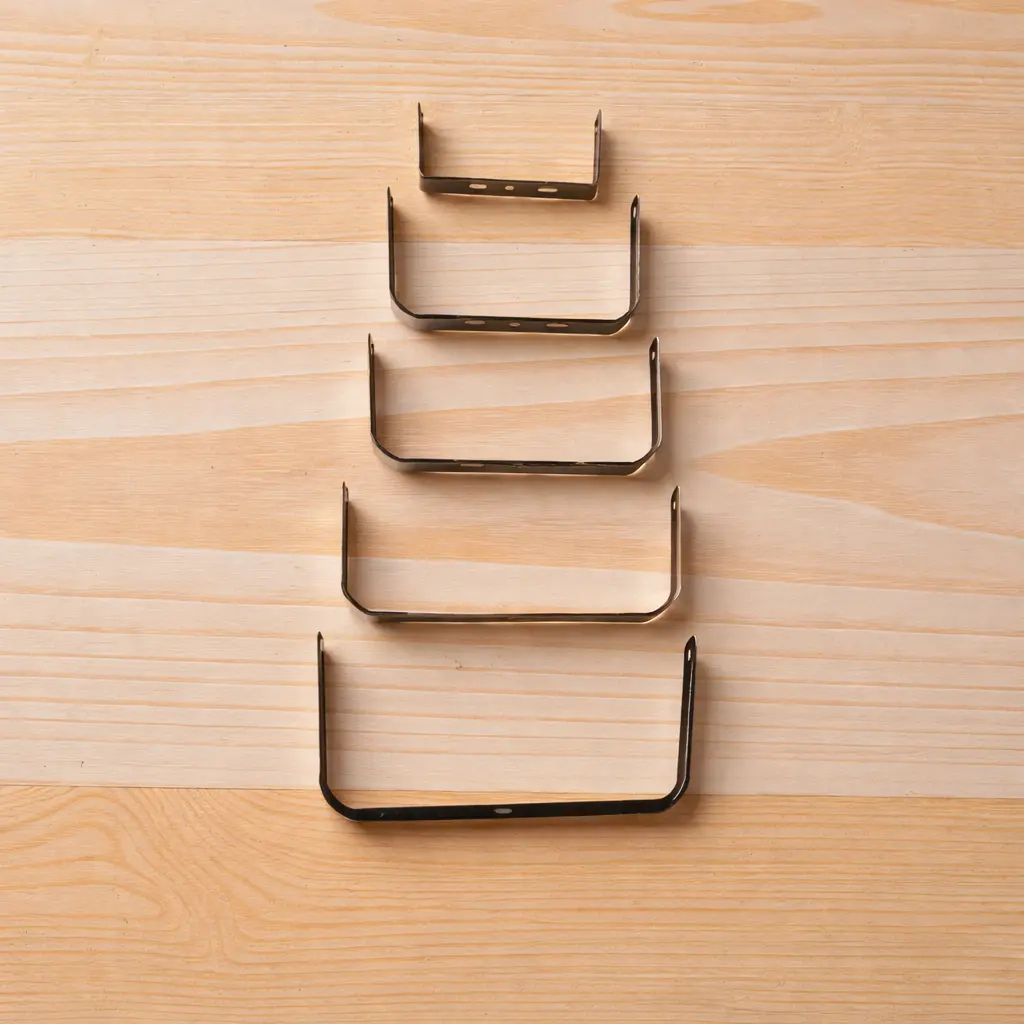
Why Flood Light Bracket Fabrication Is a Structural Problem, Not a Sheet Metal Commodity
A flood light mounting bracket performs three simultaneous mechanical functions. First, it carries the static dead load of the flood light fixture, which for commercial high-bay or stadium flood lights ranges from 8 to 35 kilograms depending on the wattage class and heat sink design. Second, it transmits dynamic wind load from the fixture to the mounting pole or wall structure. In coastal and high-wind zones of Maharashtra, design wind speeds exceed 50 meters per second, generating dynamic loads that cycle the bracket material through tens of thousands of stress reversals per year. Third, it provides a tilt adjustment mechanism that allows the beam angle to be set during installation and maintained without creep over the service life. Each of these three functions imposes specific requirements on bracket geometry, material grade, wall thickness, bend radius, weld joint design, and surface coating system. A bracket designed purely on price per kilogram without accounting for these mechanical requirements will fail in the field. The failure mode is usually not sudden fracture. It is progressive fatigue cracking at bend radii or weld toes, followed by corrosion penetration at the crack, followed by section loss, and eventually structural failure of the mounting assembly.
Technical Insight
The most common failure point in sheet metal flood light brackets is the primary bend radius at the mounting arm transition. A bracket bent with an inside radius below the material thickness creates a stress concentration at the outer fiber of the bend. Under cyclic wind loading, fatigue cracks initiate at this stress concentration and propagate through the section wall. At Aero Enterprises Unit I, bend radius for flood light bracket mounting arms is specified at a minimum of 1.5 times material thickness for CR IS 513 and 1.0 times material thickness for HR IS 2062. This is non-negotiable on any bracket specification going to outdoor installation. Secondary failure occurs at weld toes when fillet weld profiles are undercut or the weld toe angle is too sharp. All flood light bracket weld joints at Unit I are inspected for undercut and toe profile before powder coat application, because the coating will hide these defects from visual inspection post-finish.
Why It Matters
Infrastructure and commercial lighting clients in Mumbai and the wider Maharashtra belt who source brackets on price alone are absorbing replacement and reinstallation costs at 18 to 36 month intervals that far exceed the original unit price savings. At Aero Enterprises, every flood light bracket order begins with an application review covering installation environment, fixture weight, mounting configuration, and required tilt range. This review determines material grade, wall thickness, weld joint requirement, and coating specification before any production begins.
Material Selection for Flood Light Mounting Brackets: CR, GI, or Stainless
Cold Rolled IS 513 CQ grade is the base specification for flood light brackets destined for powder coat finishing in sheltered or semi-exposed environments. The smooth, scale-free surface of CR accepts powder coat with high adhesion and produces a consistent cosmetic finish. Wall thickness for standard commercial flood light brackets ranges from 2.0mm to 3.0mm depending on fixture weight and mounting configuration. For fully outdoor applications in Mumbai's coastal humidity and annual monsoon cycle, powder-coated CR is adequate when the coating system includes a zinc phosphate conversion coat primer layer before the top coat. Without the primer layer, powder coat on bare CR steel in coastal conditions fails at the cut edges and screw holes within 12 to 24 months. Galvanized IS 277 substrate is the correct specification for brackets in direct weather exposure, coastal zones within 5 kilometers of the sea, or applications where re-coating in service is not practical. The zinc coating provides sacrificial corrosion protection that continues to protect the base steel even when the top coat is mechanically damaged. Stainless steel 304 grade is specified for high-value or aesthetic installations where surface appearance over the full service life is a client requirement. The cost premium over CR with powder coat is significant and is only justified where appearance maintenance cost over 10 years exceeds the material cost difference at purchase.
Flood Light Bracket Geometry: Tilt Adjustment, Arm Length, and Wall Mounting Configuration
Flood light brackets are not standardized components. The correct geometry is derived from the fixture it carries, the mounting surface it attaches to, and the beam aiming requirement of the installation. Tilt adjustment range is the most variable parameter. Brackets for road lighting applications require tilt range of 0 to 15 degrees from horizontal. Brackets for stadium and sports facility flood lighting require tilt range of 0 to 90 degrees with locking positions at defined intervals. The adjustment mechanism is either a slotted arc hole with clamp bolt, which is simple, cost-effective, and adequate for maintenance-free installations, or a ratchet-stepped locking profile, which provides positive position retention under vibration but requires more complex tooling. Arm length, the horizontal distance between the mounting face and the fixture centreline, determines the bending moment transferred to the mounting surface. A 500mm arm carrying a 15kg fixture generates 75 Newton-meters of bending moment at the mounting face under static load alone. Wall thickness and bracket width must be sized to carry this moment with an adequate safety factor without visible deflection. Brackets that deflect visibly under the fixture weight produce progressive fatigue failure at the mounting bolt holes and are a safety liability.
Fabrication Process Sequence for High-Volume Flood Light Bracket Production
High-volume flood light bracket production at Aero Enterprises Unit I follows a defined process sequence. Step one is coil-fed stamping or laser cutting of the flat blank to the required net shape including all mounting holes, adjustment slots, and weld preparation features. For volumes above 500 pieces per order, progressive die stamping on the hydraulic press is faster and more cost-effective than laser cutting individual blanks. For volumes below 500 pieces or for non-standard geometries, fiber laser cutting provides the flexibility to modify geometry between runs without tooling change cost. Step two is CNC press brake bending of the flat blank to the required bracket profile. The 3100mm bed press brake at Unit I handles brackets up to 2500mm developed length with bend angle repeatability of plus or minus 0.5 degrees. Step three is MIG or TIG welding of gusset plates, reinforcement ribs, or secondary attachment features specified in the bracket design. All welds are inspected for undercut, toe profile, and full fusion before proceeding to finishing. Step four is powder coat application on the automated conveyor line. Parts are pre-treated with a zinc phosphate conversion coat, dried, electrostatically powder coated to the specified RAL colour, and oven cured at 180 to 200 degrees Celsius for 20 minutes. Coating thickness is measured on every batch to verify 60 to 80 micron dry film thickness on all surfaces including inside bend radii.
Stamping vs CNC Bending for Bracket Production: When Each Process Is Correct
The choice between stamping and CNC press brake bending for flood light bracket production is driven by volume and geometry complexity. Stamping using a progressive die produces a net-shape flat blank with all holes, slots, and cutouts in a single press stroke sequence. This is faster per piece than laser cutting at volumes above 300 to 500 pieces and eliminates the variable of operator-dependent blank quality in laser nesting. The trade-off is tooling investment. A progressive die for a non-standard flood light bracket blank costs between 80,000 and 250,000 rupees depending on complexity. This tooling cost amortizes to a negligible per-piece cost above 2,000 pieces but represents a significant upfront commitment for smaller volumes. CNC press brake bending is the correct forming process for both stamped and laser-cut blanks at medium volumes. For very high-volume simple L or Z bracket profiles, dedicated bending dies reduce setup time and improve angle repeatability. For low-volume complex profiles, standard V-die tooling on the CNC press brake handles the geometry without dedicated tooling investment. The geometry decision is made at the design stage. Aero Enterprises reviews bracket designs for stampability and bendability before committing to a process route and tooling investment.
Powder Coat Specification for Outdoor Flood Light Brackets: What the Coating System Must Include
Powder coat applied directly to bare sheet metal without a conversion coat pretreatment is a coating system that will fail in outdoor conditions. This is not a quality of powder coat question. It is a surface preparation and primer adhesion question. The correct powder coat system for outdoor flood light brackets has three mandatory layers. Layer one is a zinc phosphate conversion coat applied by spray or immersion after alkaline degreasing and water rinse. This layer converts the steel surface to a crystalline zinc phosphate structure that mechanically and chemically bonds to the subsequent primer or direct-to-metal powder coat. Without this layer, powder coat adhesion relies entirely on mechanical bonding to the base metal surface, which fails at cut edges and screw holes under moisture ingress and thermal cycling. Layer two is a zinc-rich epoxy primer coat or direct-to-metal primer powder coat providing a minimum 40 microns dry film thickness. Layer three is a polyester top coat in the specified RAL colour providing a minimum 60 to 80 microns total system dry film thickness. The automated conveyor powder coat line at Aero Enterprises Unit I processes brackets through this full three-stage system. Orders specifying only a single-coat powder finish without pretreatment are redirected to the correct system specification before production.
Quality Control and Dimensional Verification for Flood Light Brackets
Flood light bracket quality control covers three verification stages. Dimensional verification confirms that critical dimensions including mounting hole pattern, arm length, tilt slot geometry, and overall height are within the tolerances specified in the drawing. This is performed using calibrated jigs for high-volume production and CMM spot-check for complex geometries. Weld quality verification confirms full fusion, absence of undercut, and correct toe profile on all structural weld joints before powder coat application conceals them. Any weld joint carrying structural load that cannot be visually inspected post-coating must be verified pre-coating without exception. Coating integrity verification confirms dry film thickness on flat faces and inside bend radii, adhesion by cross-cut test on batch samples, and colour conformity to the specified RAL standard. Brackets that fail coating thickness on inside radii are the most common coating quality issue in fabricated bracket production. The coating build-up at sharp inside radii is always lower than on flat faces due to Faraday cage shielding during electrostatic powder application. Specifying a minimum 60 micron dry film thickness on inside radii rather than only on flat faces is the correct quality requirement.
Standards and Outdoor Performance Certifications for Brackets
Outdoor mounting brackets must comply with structural and safety standards. This includes calculating wind load resistance under IS 875 (Part 3) to withstand high-velocity gusts. Furthermore, the final assembly must maintain an IP65 or IP66 rating for the electrical enclosure interface, ensuring that bracket fasteners and cable entry glands do not allow water ingress. Zinc coating must comply with IS 277 or relevant ASTM powder coating standards to prevent electrochemical corrosion at contact joints.
Market Reality
The flood light bracket market in India is dominated by price-driven procurement. Infrastructure contractors, EPC firms, and lighting distributors specify brackets by fixture compatibility and unit cost, without specifying material grade, wall thickness, weld joint requirement, or coating system. The result is a market flooded with 1.5mm CR brackets with single-coat powder finish and no conversion coat pretreatment, sold at prices that make correct fabrication economically impossible. These brackets reach site, get installed, and begin failing at 12 to 24 months in the field. The replacement and reinstallation cost, which includes crane or lift access in many cases, is multiples of the original bracket unit cost. The procurement decision that looked like a saving is actually a liability that hits the project budget in year two.
At Aero Enterprises Unit I Vasai Phata, every flood light bracket inquiry begins with four questions before any price is discussed. What is the fixture weight? What is the installation environment, specifically coastal, industrial, or sheltered urban? What is the required service life? And what is the tilt adjustment requirement? These four answers determine the complete fabrication specification. A sheltered urban installation with a 10kg fixture and a 10-year service life gets a different specification than a coastal highway lighting installation with a 25kg fixture and a 15-year service life. Both are manufactured at Unit I. Neither is priced as a commodity because neither can be built correctly as one. Clients who arrive with only a unit price target are shown the field failure cost calculation first.
Get a DFM Review from Aero EnterprisesData and References
- Commercial flood light fixtures range from 8 to 35 kilograms, generating static bending moments at the mounting arm that must be calculated before bracket wall thickness is specified
- Inside bend radius below material thickness creates a stress concentration that initiates fatigue cracks under cyclic wind loading
- Powder coat without zinc phosphate conversion coat pretreatment fails at cut edges and screw holes within 12 to 24 months in coastal outdoor conditions
- Correct powder coat system for outdoor brackets requires zinc phosphate conversion coat plus minimum 60 to 80 microns total dry film thickness
- Progressive die stamping becomes more cost-effective than laser cutting per piece above 300 to 500 pieces per order
- Coating dry film thickness on inside bend radii is consistently lower than on flat faces due to Faraday cage shielding during electrostatic application
- Design wind speeds in coastal Maharashtra exceed 50 meters per second, generating cyclic dynamic loads on flood light mounting brackets
Steel Supply at Unit II Dhumal Nagar
Frequently Asked Questions
What material is used for flood light mounting brackets in outdoor applications?
Cold Rolled IS 513 CQ grade with a three-stage powder coat system including zinc phosphate conversion coat is the correct specification for semi-exposed and sheltered outdoor environments. For fully exposed coastal or high-humidity installations, Galvanized IS 277 substrate with 180 GSM minimum zinc coating provides superior corrosion resistance where re-coating in service is not practical.
Why do flood light brackets fail prematurely in outdoor installations?
The most common causes of premature bracket failure are three. First, inside bend radius below material thickness creating fatigue crack initiation sites under cyclic wind loading. Second, powder coat applied without zinc phosphate conversion coat pretreatment, which fails at cut edges and screw holes within 12 to 24 months in coastal conditions. Third, wall thickness undersized for the actual fixture weight and wind load, producing visible deflection that progresses to fatigue cracking at mounting bolt holes.
Does Aero Enterprises manufacture flood light mounting brackets?
Yes. Aero Enterprises fabricates flood light mounting brackets at Unit I Vasai Phata using hydraulic stamping presses, CNC multi-axis press brake bending, MIG and TIG welding, and an automated powder coat conveyor line with zinc phosphate pretreatment. Every bracket order begins with an application review covering fixture weight, installation environment, service life requirement, and tilt adjustment specification before fabrication begins.
What powder coat specification is correct for outdoor flood light brackets?
The correct outdoor system is a three-stage application: a zinc phosphate conversion pretreatment to guarantee adhesion, a 40-micron zinc-rich primer for galvanic protection, and a 60-80 micron polyester top coat to withstand UV and weathering. Specifying single-stage coating without pretreatment will guarantee early field failure.
What is the minimum wall thickness for a flood light bracket carrying a 15kg fixture?
Minimum wall thickness depends on arm length, bracket width, and mounting configuration as well as fixture weight. For a standard 400mm arm length carrying a 15kg fixture in a wind zone above 40 meters per second, 2.5mm CR IS 513 CQ is the minimum correct specification. Below 2.5mm at this weight and arm length, the section modulus is insufficient to carry the combined static and dynamic bending moment without visible deflection and progressive fatigue failure.
When is progressive die stamping more cost-effective than laser cutting for bracket production?
Progressive die stamping becomes more cost-effective than laser cutting individual bracket blanks at volumes above 300 to 500 pieces per order. Below this volume, the tooling investment for a progressive die is not recovered over the production run and laser cutting with CNC press brake bending is the correct process route. Above 2,000 pieces, progressive die stamping reduces per-piece cost significantly and improves blank consistency versus laser-cut individual pieces.
Recommended Technical Reading
What Is Sheet Metal Manufacturing and How Does It Work?
Sheet metal manufacturing is the industrial process of converting flat metal sheets into finished components through cutting, punching, bending, and forming operations. It forms the backbone of electrical enclosures, automotive brackets, HVAC systems, and heavy machinery structures.
Sheet Metal Laser Cutting: The Complete Guide for Indian Fabricators
Laser cutting is the most precise sheet metal cutting process available in industrial fabrication today. But precision is only as useful as the decisions made before the laser fires: material grade, sheet flatness, kerf compensation, assist gas selection, and nesting efficiency. Fabricators who treat laser cutting as a commodity service and ignore these variables are paying for precision they are not actually receiving.
Sheet Metal for Fabrication: When to Use HR vs CR vs GI Steel in India
Most fabricators in India default to whatever grade is cheapest or most available on the day of the order. That works until a weld warps, a powder coat delaminates at six months, or a client returns a full batch. The HR vs CR decision is not a price decision. It is a process-matching decision that needs to happen before the first cut, not after the first rejection.
Production Infrastructure
20 Power Presses · 3000W Laser · 7-Tank Powder Coat · CNC Bending