RIVET MANUFACTURER / SOLID RIVET / SEMI TUBULAR RIVET / BLIND RIVET / POP RIVET / CUSTOM RIVET / AUTOMOTIVE RIVET / UTENSIL RIVET Manufacturer

Rivet Manufacturer Mumbai | Solid, Semi-Tubular, Blind and Custom Rivets for Automotive and Utensils | Aero Enterprises

Aero Enterprises manufactures and supplies rivets for automotive, utensil, cookware, lighting, and industrial applications. Our range includes solid, semi-tubular, blind (pop), and custom rivets in different materials and sizes as per drawing or sample.

Sheet Metal Component Overview

Details of Rivets for Automotive, Utensils, Industrial Applications

Rivets are permanent mechanical fasteners used to join two or more parts by deforming the rivet tail to form a second head. They are widely used where a strong, vibration-resistant joint is needed and where screws or bolts may loosen over time. In automotive assemblies, rivets help secure panels, brackets, trims, and hardware. In utensils and cookware, rivets are commonly used to attach handles, lids, and other components. Aero Enterprises manufactures and supplies rivets in different types and materials to suit automotive, utensil, lighting, electrical, and general industrial requirements. We support OEMs and bulk buyers with standard sizes as well as custom rivets made as per drawing or sample.
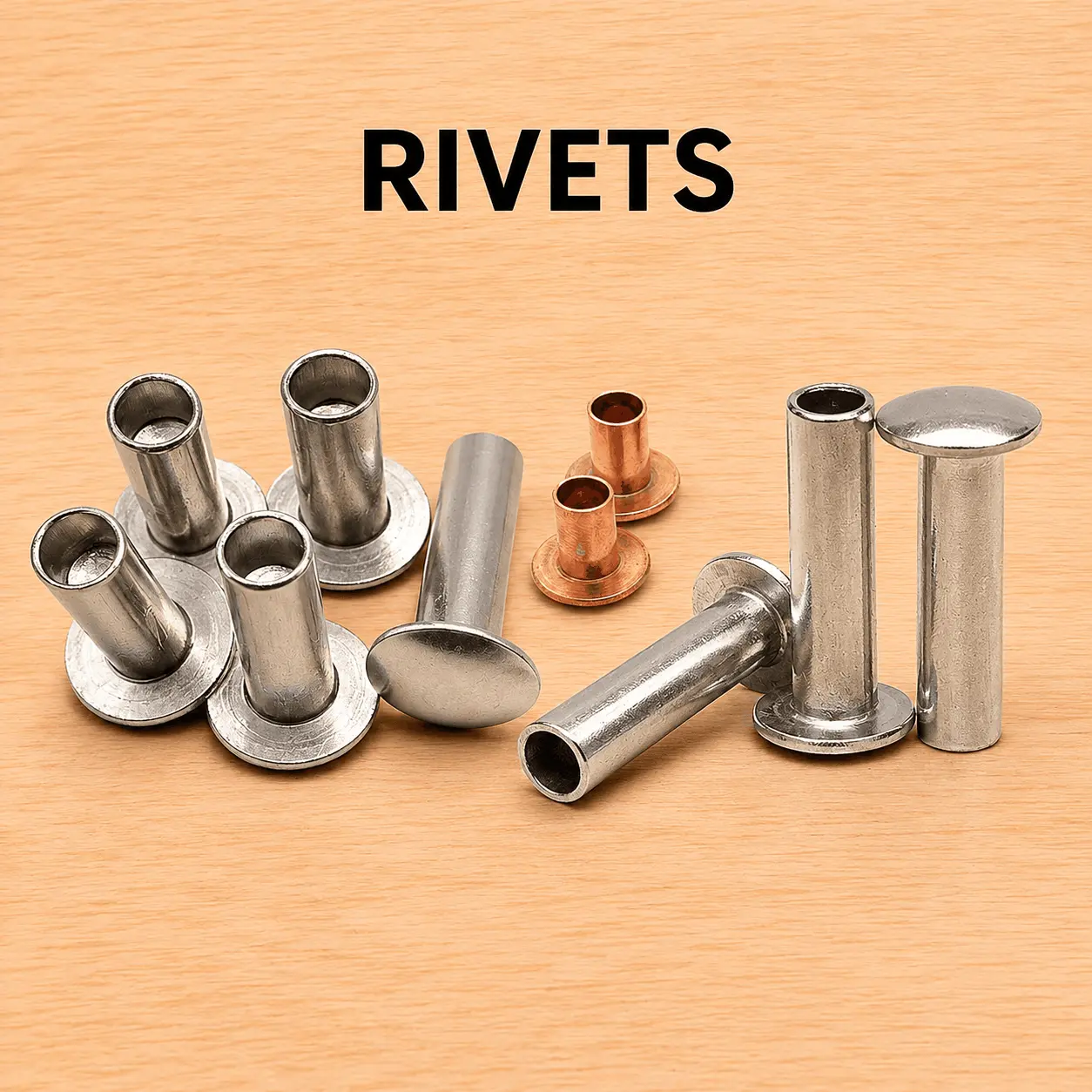
Rivets for Automotive, Utensils, Industrial Applications
“Rivets made for secure, vibration-resistant joints in automotive assemblies, utensils, cookware, lighting, and industrial hardware.”
Estimated Price
₹0.85/ Piece
Availability : Made to Order
Component Specifications

What Is a Rivet and How Is It Used?

A rivet is a permanent mechanical fastener with a head on one end and a tail on the other. When installed, the tail is deformed to create a second head, locking the parts together. Rivets are used where a strong, permanent joint is needed and where vibration, movement, or limited access makes screws less suitable. In automotive applications, rivets secure panels, brackets, trims, and hardware. In utensils and cookware, rivets attach handles, lids, and other components. In lighting and electrical assemblies, rivets join sheet metal parts, enclosures, and brackets. Common rivet types include solid rivets, semi-tubular rivets, blind (pop) rivets, and custom rivets made to specific requirements.

Data Sheet for Rivets for Automotive, Utensils, Industrial Applications

base materialAluminium · Steel / MS · Stainless Steel · Custom
rivet typesSolid · Semi-Tubular · Blind (Pop) · Custom
head typesRound Head · Flat Head · Countersunk · Custom
diameter rangeCommon sizes from 2mm to 6mm, subject to application and tooling
length rangeAs per drawing or sample
finishNatural · Zinc Plated · Nickel Plated · Powder Coated (where applicable)
hsn code7318 23 00
lead time7 to 10 working days for standard repeat batches. 12 to 15 days for new tooling or custom development.
Component Applications

Applications of Rivets

Recommended industrial use cases and fabrication applications for Rivets for Automotive, Utensils, Industrial Applications.

Automotive body panels, trims, brackets, and interior hardware requiring permanent, vibration-resistant joints.
Automotive component assemblies where access is limited to one side, making blind (pop) rivets practical.
Utensil handles, lids, and cookware assemblies where strong, permanent joints are needed.
Kitchenware and cutlery where rivets attach handles to blades or bodies.
LED lighting housings, fixture parts, and electrical enclosures requiring sheet metal joining.
Electrical and appliance assemblies where rivets join panels, brackets, and internal hardware.
Industrial equipment and machinery where permanent fastening is required.
HVAC ductwork and sheet metal assemblies where blind rivets are practical.
Signage, display, and fabricated metal assemblies requiring permanent joints.
Fashion and leather goods where rivets are used decoratively or functionally.
Material Comparison

Material Selection Guide: Aluminium vs Steel vs Stainless Steel Rivets

Aluminium rivets are preferred where weight, corrosion resistance, and appearance matter, such as automotive panels, signage, and lighting. Steel or MS rivets are used where strength and cost control are important, such as automotive brackets and industrial hardware. Stainless steel rivets are used where corrosion resistance and a premium finish are needed, such as cookware, kitchenware, and premium lighting. Custom rivets can be made in specific materials, head shapes, or sizes as per drawing or sample.

HSN & GST Classification

HSN Code of Rivets for Automotive, Utensils, Industrial Applications

Rivets of iron or steel are classified under HSN Code 7318 23 00 (Non-threaded articles: Rivets). GST rate is 18%.

Frequently Asked Questions

FAQ of Rivets for Automotive, Utensils, Industrial Applications

Aero Enterprises believe in keeping things clear and simple. Read through our common questions to understand our supply capabilities, standards, and procurement processes for Rivets for Automotive, Utensils, Industrial Applications.

Contact Aero Enterprises

What is a rivet and what is it used for?

A rivet is a permanent mechanical fastener used to join two or more parts. It is commonly used in automotive, utensils, cookware, lighting, and industrial applications where a strong, vibration-resistant joint is needed.

What are the main types of rivets?

Common types include solid rivets, semi-tubular rivets, blind (pop) rivets, and custom rivets. The right type depends on access, load, material, and application.

What is the difference between solid and blind rivets?

Solid rivets require access to both sides of the joint and provide high strength. Blind (pop) rivets can be installed from one side only and are useful where the back of the joint is not accessible.

What is a semi-tubular rivet?

A semi-tubular rivet has a partial hole at the tail end, which reduces the force needed to set it. It is commonly used in utensils, cookware, leather goods, and light-duty mechanical assemblies.

Which rivet is best for utensils and cookware?

For utensils and cookware, semi-tubular or solid rivets in stainless steel or other suitable material are commonly used, depending on the application and finish requirement.

Which rivet is best for automotive applications?

For automotive panels, trims, and brackets, blind (pop) rivets are common where one-sided access is needed. For structural or high-load joints, solid rivets may be used.

What materials are available for rivets?

Common materials include aluminium, steel/MS, and stainless steel. Custom rivets can be made in other materials as per drawing or sample.

What is the standard rivet size chart in mm?

Common rivet diameters range from 2mm to 6mm, with lengths as per application. A detailed size chart can be provided based on material and rivet type.

What is the HSN code for rivets?

Rivets of iron or steel are classified under HSN Code 7318 23 00 (Non-threaded articles: Rivets).

What is the GST rate on rivets?

GST rate on rivets under HSN 7318 23 00 is 18%.

Can Aero Enterprises make custom rivets as per drawing or sample?

Yes. Custom rivets can be made as per drawing or sample, including special head shapes, lengths, and material grades.

What is the minimum order quantity for rivets?

MOQ depends on rivet type, material, size, and tooling requirement. For a correct assessment, share the drawing or sample, material, size, and required quantity.

How are rivets manufactured?

Rivets are typically manufactured by cutting wire or strip to length, forming the head, and (for semi-tubular or blind types) forming the hollow or partial hollow section. The exact process depends on rivet type.

What is a rivet gun and how is it used?

A rivet gun is a tool used to set rivets. For blind (pop) rivets, the gun pulls the mandrel to expand the rivet body and form the joint.

Can rivets be used in aerospace and marine applications?

Yes. Rivets are used in aerospace, aviation, shipbuilding, and marine applications where permanent, vibration-resistant joints are required. Material and type are selected based on load and environment.

Can rivets be used in construction and structural engineering?

Yes. Rivets are used in construction and structural applications where permanent joints are needed. Material and type are selected based on load and environment.

Can rivets be used in electronics and appliances?

Yes. Rivets are used in electronics enclosures, appliance housings, and electrical assemblies where permanent joints are needed.

Can rivets be used in fashion and leather goods?

Yes. Rivets are used in fashion accessories, leather goods, and similar applications where decorative or functional fastening is needed.

How do I request a rivet quotation?

Share the rivet type, material, size, head type, quantity, and application. If available, send a drawing or sample. The team will review and prepare a practical quotation.

Get Your Rivets for Automotive, Utensils, Industrial Applications Today

Rivets made for secure, vibration-resistant joints in automotive assemblies, utensils, cookware, lighting, and industrial hardware.